
Specialty Vehicles CPQ: How to Configure, Price, and Quote Custom Vehicles
Learn how CPQ software handles complex specialty vehicle configurations, chassis and upfit compatibility, fleet pricing, guided selling, and quote approvals — without manual checking at every step.
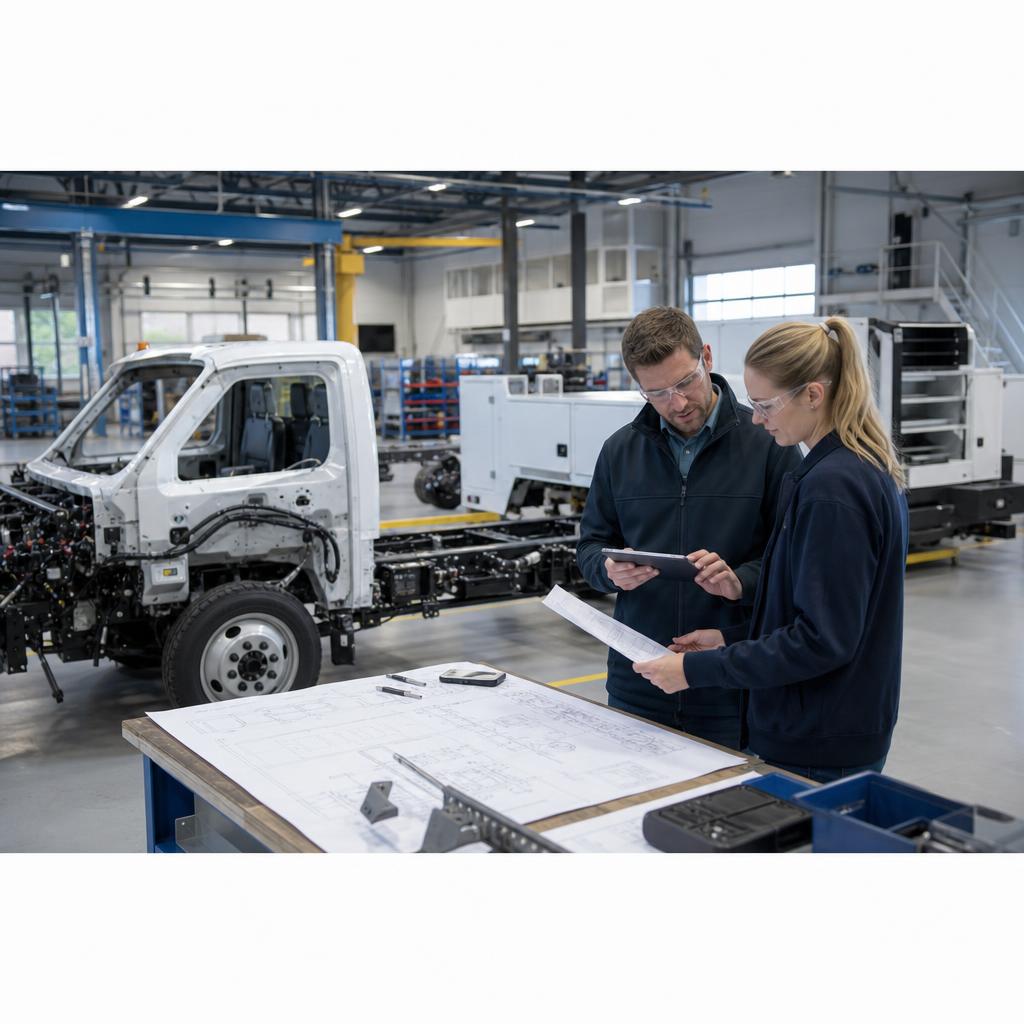
Selling a specialty vehicle is not like selling a standard product from a price list. The final configuration depends on the chassis, the body or upfit, the intended application, optional equipment packages, and the buyer's market context. Every combination affects what is technically permissible and what the correct price is.
When sales teams manage that complexity manually — across spreadsheets, engineering checklists, and disconnected approval emails — the risk of an invalid configuration or a pricing error is real. Configure, price, quote software addresses this by combining configuration logic, pricing rules, and quote generation into one governed process. This article explains how specialty vehicles cpq works, what capabilities matter most, and what to look for when selecting a platform.
What Is Specialty Vehicle CPQ?
Specialty vehicle CPQ is software that stores a vehicle catalog, the rules governing valid configurations, and the commercial terms that apply to each deal. Instead of relying on a salesperson to remember which packages are compatible with which chassis, the system enforces those dependencies automatically.
A representative selects a base vehicle, the system narrows available options to those that are technically permissible, pricing is calculated from the applicable rules, and a quote document is produced. The same logic applies whether the deal goes through a direct sales team or a dealer network. This approach matters most for vehicles with a high number of configuration variables — ambulances, fire apparatus, aerial work platforms, vocational trucks, and purpose-built fleet vehicles.
How Does CPQ Work for Specialty Vehicle Manufacturers?
A typical flow begins when a customer requirement arrives. The representative selects a base chassis or model, and the system immediately applies its compatibility rules. Options that cannot work with that chassis are removed from the list, so the next selection is already constrained to valid choices.
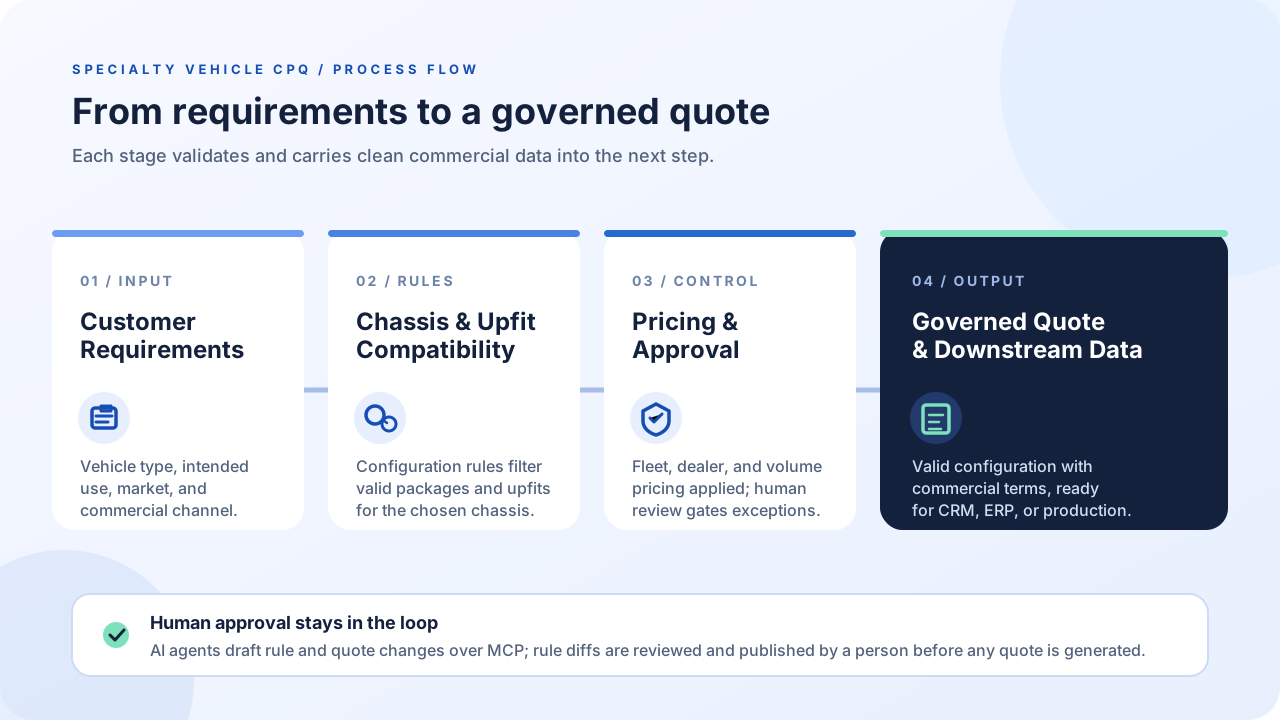
Once the configuration is valid, the platform calculates the commercial result using customer type, channel, region, and the applicable price book. If a discount falls outside the authorized threshold, the deal is routed to a manager for review. After approval, the system generates a formatted quote that can connect to CRM, ERP, or production planning — so accepted configurations do not require manual re-entry downstream.
“A CPQ system does not replace engineering judgment. It encodes the commercial and compatibility rules the business has already decided, so sales teams apply them consistently on every deal.”
Key CPQ Capabilities for Specialty Vehicle Manufacturers
CPQ for specialty vehicle manufacturing must go beyond a simple price calculator. The platform needs to represent the full technical and commercial structure of the catalog and enforce it reliably during quoting.
Vehicle Configuration Rules
Configuration rules define which combinations of models, packages, and equipment are valid. The system removes options that conflict with already-selected items, so a representative cannot submit a combination the factory cannot build. This reduces dependence on manual cross-checks and makes the process more reliable for new team members and dealers who do not know the full catalog.
Chassis, Package, and Upfit Compatibility
Specialty vehicles often combine a base chassis with a body or upfit from a separate supplier. CPQ stores the compatibility matrix between those elements and confirms — at the moment of quoting — that the selected upfit is rated for the chosen chassis and that the combined specification is within defined limits. Checks happen in real time, preventing configurations from advancing through approvals only to be rejected later.
Technical and Regulatory Constraints
Weight, payload, axle load, and dimensional limits can vary by model and market. CPQ encodes those limits as constraints and flags violations before a quote is issued. The system applies only the rules a manufacturer has defined — it does not independently determine regulatory compliance, which remains the responsibility of the engineering and compliance teams who author those rules.
Model-Year and Market Variants
A single model platform may carry different options, emissions variants, or prices across model years and geographic markets. Without version control, teams risk quoting options from an expired model year or applying the wrong market specification. CPQ platforms that support catalog versioning maintain all variants in one place and present only the options relevant to the selected year and market context.
Fleet and Dealer Pricing
A retail buyer, a fleet operator, and a dealer each operate under different price books and discount structures. Volume commitments and regional programs add further variation. A CPQ platform applies the correct pricing logic automatically based on deal context, reducing the risk that a representative misses a program the customer is entitled to claim or quotes the wrong tier.
Guided Selling
Guided selling is a structured question flow that narrows the configuration space based on the customer's requirements. The system asks about application, environment, or payload and progressively filters available options — especially valuable for dealer partners and newer representatives who need to reach a valid configuration without specialist support on every call.
Quote and Approval Management
After pricing is calculated, the system generates the formal quote and applies approval thresholds. If a representative proposes a discount or non-standard term that exceeds defined authority limits, the platform routes the exception to the appropriate reviewer. This keeps commercial discipline intact across a distributed sales organization, whether a deal originates in a direct office or a remote dealer location.
Integration With Business and Engineering Systems
CPQ connects to CRM for customer and opportunity data, to ERP for order management, and potentially to production planning tools. The goal is a single flow of accurate data from the accepted quote to the systems that fulfill the order — without redundant manual entry. CPQ is not a replacement for engineering design tools; it carries the commercially agreed configuration downstream.
Specialty Vehicle CPQ Use Cases
Specialty vehicle categories vary significantly in application, but the core CPQ task is similar across all of them: convert a customer requirement into a technically valid configuration and a commercially accurate quote.
| Vehicle segment | Typical CPQ challenge | Key rules managed |
|---|---|---|
| Emergency / fire apparatus | Complex upfit packages, NFPA-aligned specs, multi-tier dealer programs | Body-chassis compatibility, package dependencies, bid pricing |
| Ambulances | Remount and new-build options, regional spec requirements, fleet pricing | Module compatibility, model-year variants, volume discounts |
| Vocational trucks | Wide body and equipment combinations, axle and payload limits, dealer channels | GVW constraints, upfit compatibility, fleet and retail pricing |
| Aerial work platforms | Height, outreach, and weight class combinations with machine compatibility | Platform-carrier rules, market variants, rental vs. sale pricing |
| Purpose-built fleet vehicles | Fleet-scale ordering with consistent configuration and volume commercial terms | Package locks, approved equipment lists, volume pricing tiers |
How to Choose CPQ Software for Specialty Vehicles
Selection should start with an honest assessment of catalog and sales-process complexity. A configurator that cannot encode deep technical dependencies will not eliminate the manual checking that slows quotes. The most reliable test is to run a genuinely difficult scenario — a complex configuration with non-standard options and a non-standard discount — and verify that each candidate platform handles it without workarounds.
- Configuration Depth — Can the platform represent complex dependency chains between chassis, packages, upfits, and equipment?
- Technical Constraints — Does the system enforce weight, payload, and dimensional limits per configuration, not just per model?
- Catalog Versioning — Can the platform manage different model years and markets within a single catalog structure?
- Pricing Flexibility — Does it support multiple price books, dealer programs, volume discounts, and customer-specific terms?
- Dealer and Channel Support — Can dealer and partner users apply the same rules as the direct sales team?
- Rule Administration — Who can update catalog rules after launch, and does it require developer involvement?
- Testing Before Publishing — Can a new rule be validated in a sandbox environment before it affects live quotes?
- Integrations — What APIs or connectors are available for CRM, ERP, and production systems?
- Quote Control — Does the platform maintain version history and enforce the approval workflow on every exception?
- Scalability — How difficult is it to add new models, markets, or upfit partners as the business grows?
Quortix for Specialty Vehicle and Automotive CPQ
Quortix is a CPQ platform for organizations that sell configurable products with deep technical and commercial complexity. For specialty vehicle manufacturers, distributors, and dealers, it handles multi-level configuration structures including trim packages, option groups, upfit compatibility, and chassis-specific constraints. Model-year and market variants are managed within a single governed catalog.
Fleet pricing, dealer discount programs, and volume tiers are applied automatically based on customer and deal attributes. Guided selling helps representatives and dealer partners reach a valid configuration without requiring deep product expertise on every call.
Quortix uses external AI agents working over MCP to assist with catalog setup and rule drafting. When a team wants to add a model year or update a compatibility rule, an agent prepares a draft change from a plain-language description. The platform presents a visual diff of the proposed rule change so a reviewer can inspect exactly what would be added, modified, or removed before anything is published.
Rules become active only after a human explicitly approves and publishes them. Deterministic published rules govern every quote — the AI assists with authoring and review but does not alter what the system enforces without authorization. The same agent can prepare a quote draft from structured customer requirements, which a sales team member reviews before sending. To explore how Quortix fits a specific business context, reach out at /contact.
Conclusion
The core challenge in specialty vehicle sales is connecting customer requirements, technical constraints, equipment compatibility, and commercial terms in a process that produces a reliable quote without extensive manual review. CPQ software addresses this by encoding the manufacturer's rules and applying them consistently across the organization.
The right platform must represent actual catalog complexity — not just simple cases — and allow rules to be maintained without permanent dependence on technical specialists. For manufacturers, distributors, and dealers working with complex configurable vehicles, Quortix is one option for governing configuration logic, pricing, and quote documents in a single managed system.