
Best CPQ Software: 9 Platforms Compared
Nine CPQ platforms reviewed in one consistent format — what each does well, who it fits, and where its limits are — so you can shortlist against your own requirements.
There is no universally best CPQ software — and any list that claims otherwise is selling something. The right platform depends on how complex your catalog is, what role you want AI to play, which pricing models you sell, which CRM or ERP sits at the center of your business, and how much of the quote-to-cash process the system needs to own.
This guide compares nine quoting platforms in a single, consistent format. The goal is not to crown a winner. It is to give you enough substance about each system to judge it against your own requirements — and to know which questions to ask in a demo.
A quick definition before diving in. CPQ software supports three connected tasks: configuring a valid product, applying the applicable price and approval rules, and producing a quote the customer can accept. Whether that reduces errors or review time depends on the quality of the catalog, rules, integrations, and operating process behind it; buying the engine does not fix unreliable source data.
CPQ Software Platforms Reviewed
Each platform below is reviewed in the same structure: what the product is, what it does well, who it fits, and where its limits are. The order is not an absolute ranking. A system that is a poor match for a ten-person SaaS team can be exactly right for a global manufacturer, and the reverse is just as true.
The market for these tools is wide. Some are lightweight quote generators bolted onto a CRM; others are enterprise engines that model engineering constraints and hand orders to an ERP. Judging them on the same axis makes little sense — so judge each on the quotes it will actually produce for your team, on your catalog, in your process.
As you read, keep four evaluation questions in mind: Can the software model your catalog without custom code? Who maintains the rules once the consultants leave? How do quotes flow between the system and your CRM and ERP? And what does year two cost — not just year one?
Quortix.ai — AI-Native CPQ for AI-Assisted Administration and Quoting
Quortix.ai is an AI-native configure price quote platform. Its defining difference is not a built-in AI helper — it is the ability to connect authorized AI agents your company already uses through the Model Context Protocol (MCP) and let them inspect data, simulate outcomes, and update permitted catalog, rule, and draft objects.
That distinction matters because an AI label does not explain where work happens or who controls it. Quortix.ai has no in-app chatbot. An external agent connects over MCP, while the visual workspace provides the operating surface for the CPQ model. Teams can require people to review consequential changes and customer-facing quotes as part of their own process. Once rules are published, the quote engine executes them deterministically.
In practice, an authorized MCP-compatible agent can inspect catalog data, simulate outcomes, and update the catalog, rules, or quote drafts it is permitted to change. Buyers should test authentication, permissions, simulation results, and failure handling with the agent they intend to use. If their policy requires review before delivery, they should verify that their operating process provides it.
AI for CPQ administration
An administrator or RevOps specialist can use a connected agent to update a permitted product, pricing tier, bundle, constraint, or rule through MCP. Before relying on the result, the team can inspect the affected objects and simulate representative configurations. They decide which roles may make or publish changes through their own operating policy.
Organizations that need traceability or formal sign-off should establish those controls in their broader process and verify how the product's current records fit their requirements. Access permissions, retention, evidence, and release ownership remain buyer responsibilities.
AI-assisted sales quoting
The second scenario turns captured customer requirements into a draft proposal. An agent can update a permitted quote draft through MCP using the live catalog and published configuration and pricing rules. A rep or manager can then check quantities, assumptions, exceptions, commercial terms, and customer context before sending when their sales process calls for that review.
The important detail is the control boundary a buyer defines. An agent can work only within its permissions; teams that want human review before delivery should make it part of their sales process. Published rules execute deterministically rather than being reinterpreted by a model on every deal.
“The test for AI in CPQ is not whether it can chat. It is whether authorized agents can work within clear permissions, simulate the relevant outcomes, and leave published rules deterministic.”
Beyond the two AI scenarios, the platform covers the core CPQ feature set:
- Visual rules engine with a dependency graph that shows how rules interact before a change ships.
- Rule simulator for testing pricing and constraint changes against real configurations.
- Catalog, pricing, and configuration objects that authorized agents can inspect and update through MCP.
- APIs and integration patterns for CRM and ERP systems.
Who It's Best For
Quortix.ai fits sales and sales-operations teams that want authorized external AI agents to inspect, simulate, and update permitted CPQ objects through MCP. It is worth evaluating for a move off spreadsheets or a legacy CPQ, including SaaS and configurable-equipment catalogs. It is a weaker fit when policy forbids external agents, when the buyer wants a chatbot inside CPQ, or when a deeply customized incumbent ERP stack makes migration cost outweigh the administrative benefit.
For teams weighing AI claims across vendors, ask for one rule change and one quote to be demonstrated end to end: which data the agent can read, which objects it may update, what it can simulate, and how permissions are configured. If your policy requires review or approval before a customer receives a quote, ask how that process will be implemented. Also verify that a published rule produces the same result for the same inputs without a model improvising at runtime.
Salesforce Agentforce Revenue Management
Salesforce positions Agentforce Revenue Management as something broader than traditional CPQ. It brings pricing, quoting, contracts, orders, usage, and billing together inside Salesforce, and Agentforce agents can help create and update quotes along the way.
For companies deep in the Salesforce ecosystem, the appeal is structural: quoting stops being a separate software purchase and becomes part of the same data model that already holds the pipeline.
- Native work with Salesforce data — accounts, opportunities, and products stay in one place.
- Unified product and pricing catalogs shared across the whole revenue process.
- Configurable products and bundles with discount and approval rules.
- Contract, order, usage, and billing objects connected to the same catalog.
Who It's Best For
Large and fast-growing companies already committed to Salesforce that want catalog, pricing, proposals, contracts, orders, and billing managed in one system rather than stitched together across point tools.
Limitations
The solution can be more than a company needs if the actual requirement is a simple proposal generator. Implementation assumes your catalog, prices, processes, and user roles are prepared in advance — that groundwork is not optional.
Complex projects typically involve Salesforce administrators and often an implementation partner. Budget for configuration, data migration, integrations, and ongoing support — not just licenses. And teams moving off the older Salesforce CPQ should verify how their existing rules map to the new model before committing.
DealHub — Connected CPQ for Growing Sales Teams
DealHub combines CPQ with a digital deal room, subscription management, and billing. The pitch is a connected path from product setup to invoice, rather than a standalone quote generator that hands off to other systems.
The product covers guided product selection, pricing rules, automated discount approvals, proposal generation, and support for one-time, subscription, and usage-based payment models. Administration is no-code, and the platform integrates with the mainstream CRM systems.
The deal room is worth singling out. Instead of emailing a PDF, the seller shares a live page where the buyer reviews the offer, asks questions, and signs — and the seller sees engagement signals along the way.
Who It's Best For
Mid-sized companies, SaaS business models, and scaling sales teams that have outgrown standalone proposal tools and want quoting, buyer engagement, and billing connected in one flow.
Limitations
Pricing is calculated individually per customer, which makes total cost hard to estimate up front. The full module set may also be more than a team needs if the requirement is a basic CPQ solution only.
Manufacturers should verify support for bills of materials, engineering dependencies, and integration with production ERP systems. And even with no-code administration, complex pricing models still demand well-prepared data and rules.
Oracle CPQ — Enterprise Configuration Connected to ERP
Oracle CPQ is an enterprise platform built for deeply configurable products, very large catalogs, and processes that are tightly coupled to ERP.
It handles guided configuration, dynamic pricing, discount approvals, and proposal generation, and it extends into territory most tools do not touch: quoting against a customer's installed assets, generating bills of materials, and handing a confirmed order to downstream systems.
That depth is the point. Oracle CPQ competes where the quote is effectively a small engineering project — hundreds of line items, nested configurations, and commercial terms that must reconcile with what the factory can actually build.
Who It's Best For
Global manufacturing, technology, and B2B companies with large catalogs, complex configuration rules, and an internal IT team that can own the platform long term.
Limitations
For smaller companies and simple catalogs, Oracle CPQ is heavy. Implementation and ongoing development usually require specialized administrators and developers, and day-to-day administration is more technical than in modern no-code systems.
ERP integration typically needs dedicated configuration work even where a ready-made connector exists. Anyone migrating should assess the effort of moving the catalog, quote scenarios, rules, and order workflows before signing.
Conga CPQ — CPQ for Complex Quotes and Contracts
Conga offers more than one CPQ product — including Smart CPQ and Advantage CPQ — so the first task for a buyer is identifying which product line fits their architecture.
Across the portfolio, the capabilities cover guided selection, complex bundles, price and margin controls, multi-step approvals, automated document generation, and a tight link into contract lifecycle management.
That contract link is the differentiator. In document-heavy sales, the quote is only the opening move — the negotiated terms, redlines, and renewal obligations that follow are where deals are won or leaked. Conga's bet is that owning that whole chain matters more than owning quoting alone.
Who It's Best For
Large companies whose quotes carry many line items and heavy documents, and where proposals are closely tied to contracts, amendments, and renewals.
Limitations
The existence of several CPQ products and add-on modules complicates the initial evaluation. Buyers need to establish early which Conga product matches their stack — before comparing it to anything else.
Enterprise-grade configuration can extend implementation timelines and raise training requirements. Clarify what ships in the core product versus what requires the separate contract, document, or pricing tools.
SAP CPQ — CPQ for SAP-Centered Sales Processes
SAP CPQ configures complex products, calculates prices, and produces quotes across direct, partner, and e-commerce sales channels.
Like Oracle, SAP treats CPQ as one link in a longer chain that runs from opportunity to order to fulfillment. The system is designed to hand a clean, validated order to SAP ERP without manual re-entry.
It models dependencies and constraints between components, applies discount rules and approvals, generates proposals, supports partner selling, and connects to CRM, e-commerce, and ERP systems.
Who It's Best For
Manufacturing, distribution, and international B2B companies — particularly those already running SAP ERP, SAP Sales Cloud, or other parts of the SAP ecosystem.
Limitations
The product delivers the most value inside an SAP architecture. Integrating with ERP and complex configuration models can require experienced specialists, and that expertise is not cheap.
Before implementation, decide which system will hold the catalog, prices, and rules as the source of truth. Setting up organizational structures, regions, price lists, and sales channels takes real time. If you run a third-party CRM, check the depth of data synchronization — not just whether an integration exists.
HubSpot CPQ — CRM-Connected Quoting for Growing Teams
HubSpot's quoting lives inside its CRM: a rep creates a quote directly from a deal record, pulls items from a product library, and applies fixed or tiered pricing, discounts, and taxes.
Approvals, templates, e-signature, and buyer acceptance are built in, so a deal can move from draft to signed order without leaving HubSpot.
The strength of this approach is workflow proximity. Reps already working in HubSpot can create a quote from the deal record rather than switch to a separate CPQ. That removes one application boundary, although integrations with accounting, ERP, tax, or fulfillment systems may still need synchronization and monitoring.
Who It's Best For
Small and mid-sized companies already on HubSpot that want quotes, invoices, and payments handled in the CRM without deploying a separate heavyweight CPQ platform.
Limitations
Advanced features depend on the Revenue Hub tier and the number of paid seats, so capability and cost scale together as the team grows.
The system is not designed for complex engineered products, large bills of materials, or deep manufacturing configuration. Test product dependencies, configuration validation rules, and ERP integration against your own catalog before committing — and model how cost changes as you add users and other HubSpot products.
Zoho CRM CPQ — Built-In CPQ for Zoho Users
Zoho CRM includes a built-in set of CPQ tools for configuring products and automating pricing directly inside the CRM.
Its Product Configurator and Price Rules can add mandatory items automatically, recommend related products, assemble bundles, apply discounts, calculate dynamic prices, and automate quote line items — without a separate platform.
Because the CPQ layer ships inside the CRM, a team may avoid a separate CPQ contract and the CRM-to-CPQ integration. That can simplify a small deployment, but downstream accounting, tax, inventory, or fulfillment connections can still create implementation work.
Who It's Best For
Small and mid-sized teams already working in Zoho CRM with a relatively straightforward catalog, who want basic configuration without buying a separate enterprise CPQ system.
Limitations
CPQ capability is tied to Zoho CRM's architecture and editions, and some features roll out gradually or only to specific user categories.
Engineering-heavy configurations, subscription changes, and usage-based calculations should be validated in a demo with your own data. Integrations outside the Zoho ecosystem may also need extra setup work.
Salesbricks — Quote-to-Payment Platform for B2B SaaS
Salesbricks targets B2B SaaS companies with a single connected flow: plan configuration, proposal, contract, invoice, and payment.
It supports subscription and usage-based models, bundles, price ramps over the contract term, configurable quotes, legal terms, e-signature, billing, and payment collection — the whole span from a plan picked to money received.
The design follows a common sales-led SaaS sequence: select a plan, adjust terms, execute the contract, invoice, and collect payment from connected records. Keeping those steps together can reduce re-entry, though buyers should still test amendments, credits, tax, failed payments, and accounting handoffs rather than assuming continuity covers every exception.
Who It's Best For
SaaS startups and growing B2B companies that want one motion from plan selection to invoice and collected payment, without assembling separate billing and signature tools.
Limitations
The product is built for software and subscriptions first. It is unlikely to fit manufacturers with engineering dependencies and bills of materials.
Verify support for the CRM, accounting, tax, and payment systems you rely on. International companies should also confirm how the platform handles multiple currencies, legal entities, tax regimes, and financial reporting requirements.
Frequently Asked Questions
What Is the Best CPQ Software?
There is no single best system. The right choice depends on catalog complexity, pricing models, the role you want AI to play, the CRM and ERP already in place, your budget, and the resources you can commit to implementation.
What Is the Best AI CPQ Software?
Compare the specific role AI plays rather than the label on the box. Quortix.ai lets authorized agents connect over MCP to inspect data, simulate outcomes, and update permitted catalog, rule, and draft objects. Buyers define any review requirements for their process, and published rules execute deterministically — a different model from a chat assistant.
What Is the Best CPQ Software for Small Businesses?
Quortix.ai, HubSpot CPQ, and Zoho CRM CPQ are practical options for small businesses. The final call depends on how complex the catalog is and which CRM the team already runs day to day.
What Is the Best CPQ Software for SaaS?
Quortix.ai, DealHub, HubSpot, Salesforce, and Salesbricks all serve SaaS at different scales — from a first sales hire quoting subscriptions to an enterprise unifying quoting with usage-based billing and revenue operations.
How Much Does CPQ Software Cost?
Total cost covers licenses plus implementation, integrations, data migration, training, and ongoing support. Many enterprise vendors publish no price at all and give a figure only after a consultation, so budget for the full project.
Conclusion
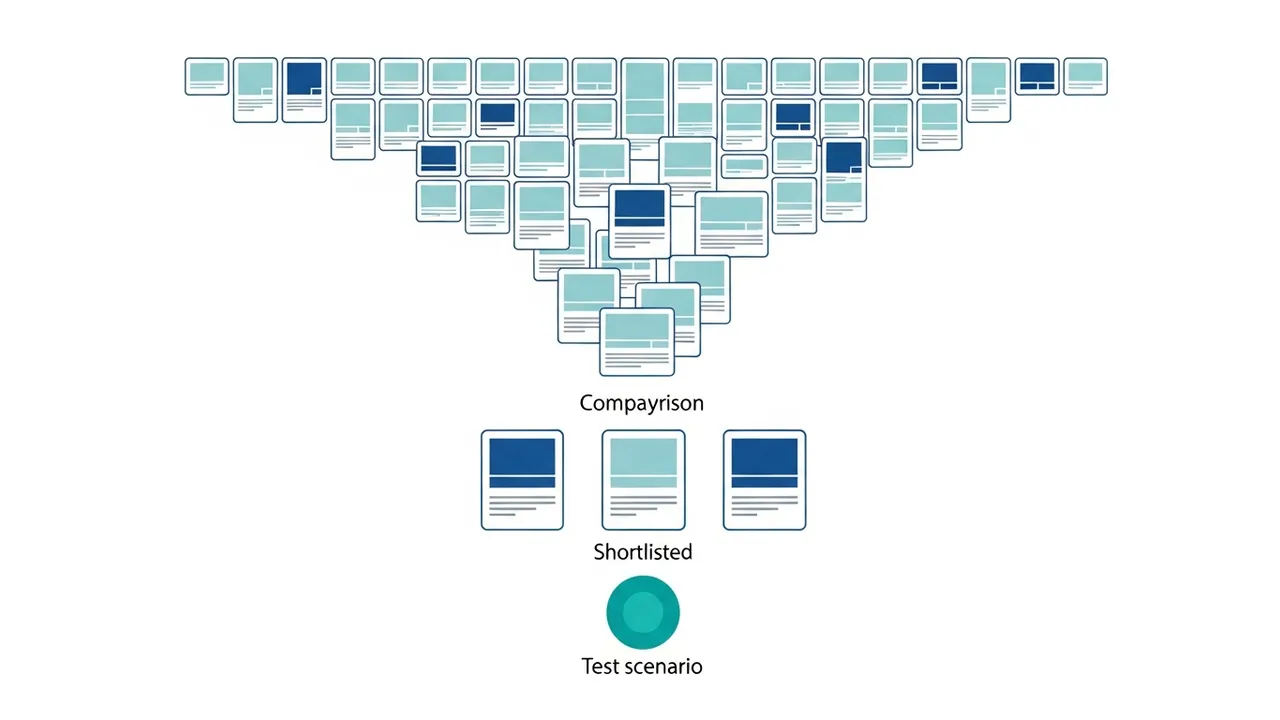
The right CPQ is not the one at the top of a list — it is the one that matches how your business actually sells. Every platform reviewed here is the correct solution for someone and the wrong one for someone else.
So skip the search for an absolute winner. Shortlist three platforms that plausibly fit your catalog, pricing models, and stack — then run the same real scenario through each: one genuine deal, with its actual products, discounts, and approval path. The system that handles that scenario with the least friction is your answer, whatever any ranking says.
Three practical checks for that shortlist stage: insist on a pilot with your own catalog data rather than a canned demo; have the people who will administer the system — not the vendor — make a rules change during evaluation; and get the full cost in writing, including implementation and integrations.